Grease Trap Cleaning Oakland, CA
For grease trap cleaning Oakland CA restaurants can put on a fixed schedule, we run a dedicated East Bay route. Oakland has one of the most diverse restaurant scenes in the country, and every one of those kitchens, from the taquerias on International Boulevard to the tasting-menu rooms in Uptown, produces fats, oils and grease that have to be kept out of the sewer. We clean and pump grease traps and interceptors across the whole city and provide the paperwork the East Bay Municipal Utility District's FOG program expects to see.
Our East Bay route runs through Oakland several times a week, so scheduled cleanings are easy to line up and emergency calls get answered fast. Call (628) 221-4893 to book.
Grease trap cleaning in Oakland: call now(628) 221-4893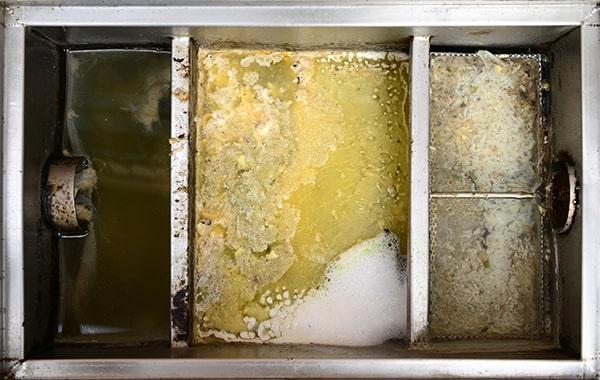
EBMUD's FOG program and what it means for Oakland kitchens
EBMUD treats wastewater for Oakland and inspects food service establishments under its Fats, Oils and Grease control program. Inspectors look for three things: that the trap or interceptor is properly sized and installed, that it is being cleaned before the 25 percent grease and solids mark, and that you can show maintenance records for at least the past three years.
Oakland has its own sewer collection system maintained by the city, and both the city and EBMUD have spent heavily to reduce sanitary sewer overflows into Lake Merritt and the Bay under a federal consent decree. Grease-related blockages in the collection system are traced back to the nearest food establishments, so a kitchen with a neglected trap is not a low-risk kitchen.
We structure our service around those rules. Every cleaning includes a measurement of grease depth before pumping, a full evacuation and scrape, and a record with the manifest number. If EBMUD has already issued a notice of violation, we can help you set a documented frequency that resolves it.
Grease trap service by Oakland neighborhood
Downtown and Uptown restaurants often share basement interceptors in older office and mixed-use buildings, and access is through a sidewalk manhole or a mechanical room. We work with building engineers to schedule those and we bring hose long enough to park on Broadway or Telegraph and reach the unit.
Fruitvale, the Dimond and International Boulevard are dense with independent Mexican, Vietnamese and Cambodian restaurants that typically run smaller floor traps under heavy fry loads. Those kitchens are where we see the most emergency calls, and where a monthly cleaning pays for itself quickly.
Jack London Square and the new construction in Brooklyn Basin were built with larger in-ground interceptors, often 1,500 gallons or more, that need a vacuum truck with real capacity. Temescal, Rockridge, Grand Lake and Piedmont Avenue sit in between: mostly moderately sized traps behind independent restaurants that want a quiet, on-time crew before the doors open.
- Downtown, Uptown, Old Oakland and Chinatown
- Fruitvale, Dimond, Laurel and International Boulevard
- Jack London Square and Brooklyn Basin
- Temescal, Rockridge, Grand Lake, Piedmont Avenue and Montclair
Grease Trap Pumping in Oakland
Our trucks pump from the top of the grease cap to the bottom sludge in one pass, so the trap is truly empty rather than half-emptied. We work around Oakland's tight parking by running hose from a loading zone or alley, and every pump-out is manifested to a permitted facility.
Grease Interceptor Cleaning in Oakland
Interceptors under Downtown sidewalks and in the mechanical rooms of Uptown mixed-use buildings need more than a pump-out. We open each compartment, scrape the baffle walls, clear the outlet tee, check the sample box and refill, then note the structural condition on your record.
Grease Interceptor Pumping in Oakland
Large interceptors at Jack London Square, the Oakland Coliseum concessions, hospital kitchens and school district central kitchens are pumped on a scheduled rotation. We handle manhole access, traffic control on busy streets and keep the visit quick.
Where we work in Oakland
Our Oakland coverage includes Downtown, Uptown, Old Oakland, Chinatown, Jack London Square, West Oakland, Temescal, Rockridge, Piedmont Avenue, Grand Lake, Lakeshore, Fruitvale, the Dimond, Laurel, East Oakland along International Boulevard, Montclair, and the airport and Coliseum area.
Call for same-week service in Oakland(628) 221-4893Nearby cities we also serve from the East Bay route
The truck that covers Oakland runs the same route through the cities below, so multi-location operators can put every kitchen on one schedule. Full details for each city, and the complete service areas list, are one click away. Not sure which service you need? Read our short guides to grease trap cleaning and grease interceptor cleaning.
One number for every location: call now(628) 221-4893Oakland grease trap questions
Does EBMUD require restaurants in Oakland to keep grease trap cleaning records?
Yes. EBMUD's FOG program requires food service establishments to maintain cleaning records, and inspectors ask for them during site visits. We give you a record with every service and keep our own copy in case yours goes missing.
How does Oakland grease trap cleaning relate to the 25 percent rule?
It means the combined depth of the floating grease layer and the settled solids should never exceed 25 percent of the interceptor's liquid depth. Once it passes that point the unit stops separating grease effectively and needs to be pumped.
Can you access an interceptor in a Downtown Oakland basement?
Yes. We service interceptors in basements and mechanical rooms of older Downtown and Uptown buildings regularly. We coordinate with the building engineer and run vacuum hose from the truck to the unit.
How often do restaurants on International Boulevard need trap cleaning?
Kitchens doing high-volume frying, carnitas or pho with small floor traps often need service every four weeks. Lighter-use kitchens can go six to twelve weeks. We measure the grease depth on the first visit and set a frequency from there.
What happens if grease from my restaurant causes a sewer overflow?
The City of Oakland and EBMUD trace blockages to nearby food establishments. You can be billed for cleanup and cited under the sewer use ordinance. Keeping the trap on a documented schedule is the simplest way to avoid that exposure.
Do you take used fryer oil as well?
Fryer oil should be stored in a separate container and collected by a used cooking oil recycler rather than poured into the trap. We can point you to a collection program if you do not have one.
Can you pump a 2,000-gallon interceptor at Jack London Square in one trip?
Yes. Our trucks have enough tank capacity to pump interceptors of that size without leaving to unload mid-job.
Will you clean the trap before we open for brunch?
Yes. Early morning slots before service are one of our most common requests from Temescal, Rockridge and Grand Lake restaurants, and there is no extra charge for scheduled off-hours work.
What is a sample box and why do you check it?
It is the small chamber on the outlet side of an interceptor where an inspector can draw a wastewater sample. If grease has built up there, it suggests the interceptor is overloaded or damaged, so we clean it and note what we found.
How do I know if my interceptor has a broken baffle?
The usual signs are grease showing up in the outlet compartment or sample box shortly after a cleaning. We inspect the baffles each time we open the unit and will tell you if one is cracked or missing.
Is there a difference between a grease trap and a grease interceptor in Oakland's rules?
In practice the terms overlap. Small indoor units are usually called traps and large in-ground units interceptors, but EBMUD's cleaning and record-keeping expectations apply to both.
Can you service several Oakland locations under one account?
Yes. Restaurant groups with locations across Oakland get a single point of contact, one rotation across all sites and consolidated invoicing.