What Is Grease Interceptor Pumping?
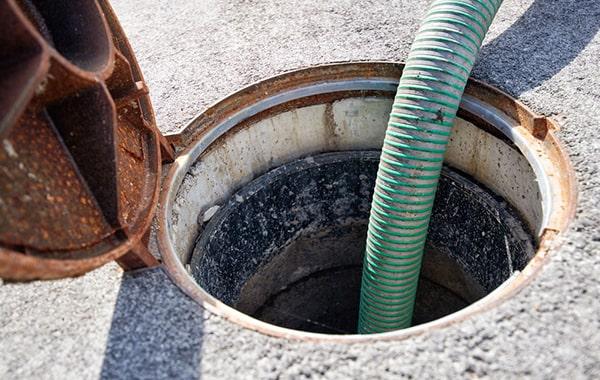
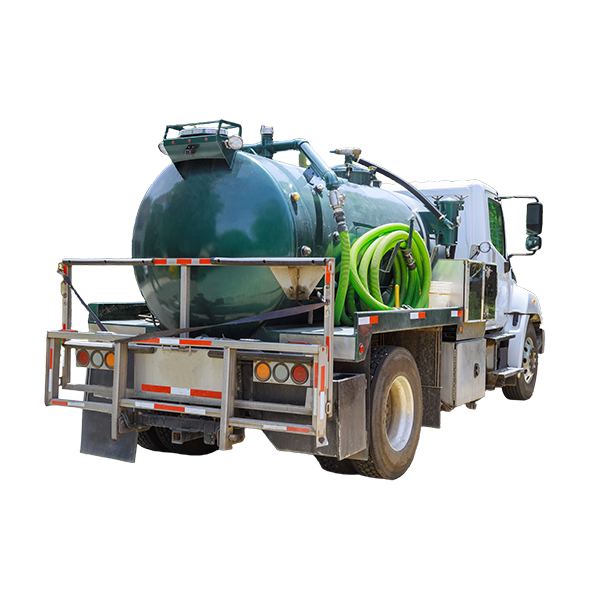
Grease interceptor pumping is the evacuation of a large in-ground interceptor with a high-capacity vacuum truck. The truck's hose is lowered through the manhole covers into each compartment and the grease, water and solids are drawn into a sealed tank. For the largest interceptors, found at hotels, campuses, venues and food plants, pumping can involve thousands of gallons and more than one truck.
Call to schedule interceptor pumping(628) 221-4893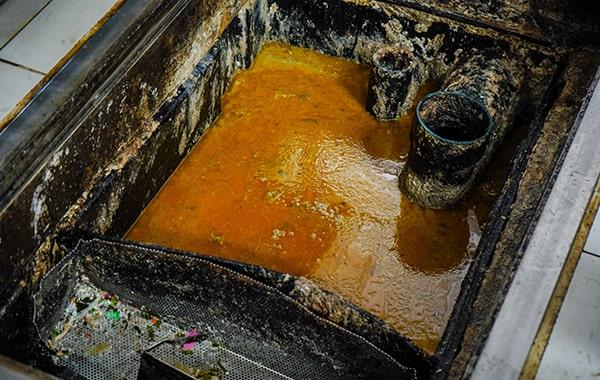
How interceptors are pumped
An interceptor has multiple manholes, one per compartment. A proper pump-out uses all of them, because grease and solids collect in every chamber, not just the first. The crew measures the grease and solids depth before starting, pumps each compartment down to the floor, then refills the tank with clean water so it separates grease immediately.
Large interceptors require trucks with enough tank capacity to take the whole load in one trip, or a second truck standing by. Pumping half an interceptor and leaving the rest is not a service.
Why interceptors have to be pumped
An interceptor has a fixed capacity and nothing leaves it on its own. Every day of kitchen operation adds grease on top and solids on the bottom. Once they occupy 25 percent of the depth, the interceptor stops separating grease effectively and passes it to the sewer, where hundreds of gallons of grease can block a main in a short time.
Sewer agencies enforce that threshold and require records showing when the interceptor was pumped and where the waste went. Large kitchens and food processors often operate under pretreatment permits that make interceptor pumping a permit condition.
- Every compartment pumped through its own manhole
- Grease depth measured and recorded before pumping
- Refill with clean water
- Manifested disposal at a permitted facility
Scheduling interceptor pumping
Because interceptors are large, pumping is usually scheduled on a fixed rotation, monthly to quarterly depending on how fast the unit fills, and timed to avoid meal periods and production shifts. Venues that see bursts of use, such as stadiums, fairgrounds and event halls, are pumped around their event calendar rather than on a flat interval. Each pump-out should produce a record listing the grease depth, volume removed, condition and manifest number, itemized per interceptor for sites with more than one.
Where we provide this service
Pick your city for local pricing notes, sewer district requirements and neighborhood details.
- San Francisco, CA
- Daly City, CA
- Oakland, CA
- Berkeley, CA
- Richmond, CA
- San Mateo, CA
- South San Francisco, CA
- San Leandro, CA
- Alameda, CA
- Hayward, CA
- San Rafael, CA
- Millbrae, CA
- San Bruno, CA
- Redwood City, CA
- Castro Valley, CA
- Concord, CA
- Vallejo, CA
- Union City, CA
- San Carlos, CA
- Fremont, CA
- Walnut Creek, CA
- San Ramon, CA
- Pleasanton, CA
- Novato, CA
- Mountain View, CA
- Sunnyvale, CA
- Santa Clara, CA
- Santa Rosa, CA
- San Jose, CA
- Antioch, CA
- Fairfield, CA