What Is Grease Trap Cleaning?
A grease trap is a small tank, usually 20 to 100 gallons, installed between a kitchen's sinks and the sewer line. Wastewater flows in, slows down, and the fats, oils and grease float to the top while food solids sink. The cleaner water in the middle flows on to the sewer. Cleaning is the process of removing what the trap has collected and restoring it to full working capacity.
Call to schedule a cleaning(628) 221-4893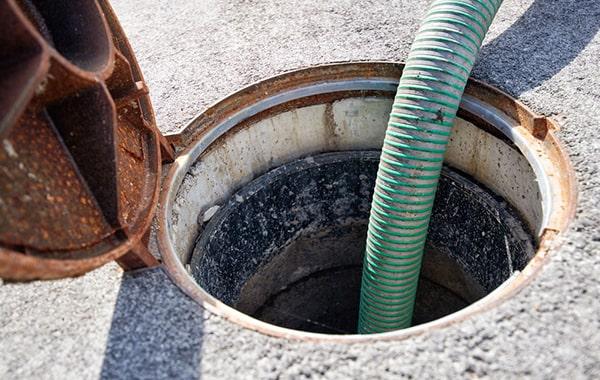
How a grease trap works
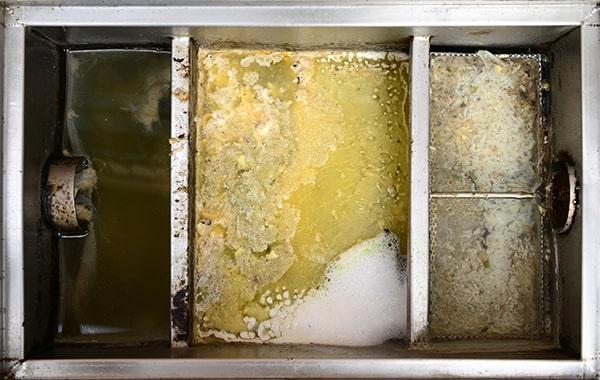
Grease is lighter than water, so if wastewater is held still for a minute or two the grease separates and rises. A grease trap is designed to do exactly that. Water enters through an inlet fitted with a flow control device that slows it down, passes through one or more baffles that stop turbulence, and leaves through an outlet tee that draws from below the surface so the floating grease stays behind.
The trap only works while it has room. As the grease layer thickens and the solids pile up, the space in the middle shrinks, water moves through faster and grease starts escaping through the outlet. Regulators use a simple rule for this: once grease and solids together occupy 25 percent of the trap's depth, it needs to be cleaned.
Why cleaning matters
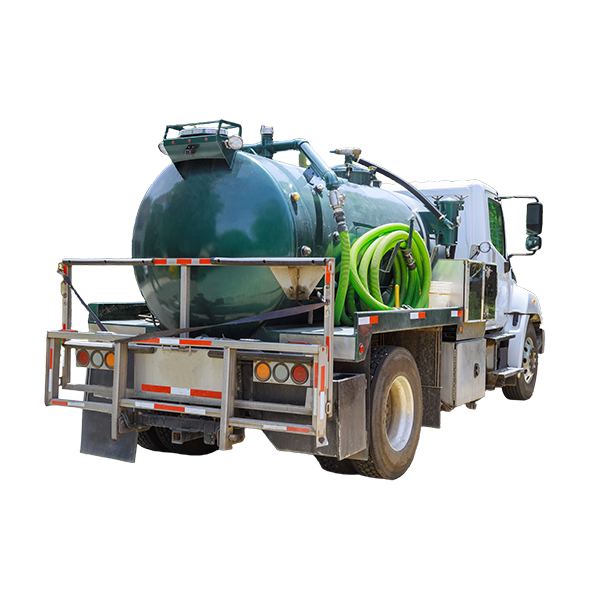
Grease that escapes a trap cools and hardens in the sewer lateral and the public main. It narrows the pipe, catches debris and eventually blocks it. The result is a backup into the kitchen, a sewer overflow in the street or both, and the kitchen that caused it is usually billed for cleanup and cited by the local sewer agency.
A trap that is left too long also breeds odor. Fats and food solids decompose in warm water and release sulfur compounds that drift into the dining room. Regular cleaning keeps the trap working, keeps the sewer clear and keeps the smell down.
- Prevents backups and sewer overflows
- Keeps you compliant with local FOG rules
- Controls odor
- Extends the life of the trap
What a proper cleaning includes
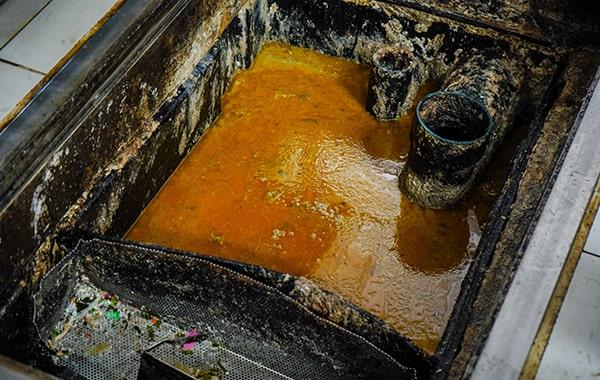
A real cleaning removes everything in the trap: the grease cap, the water and the settled solids. The walls, baffles and lid are scraped, the inlet and outlet fittings are checked, and the trap is refilled with clean water so it separates grease immediately. A skim that removes only the floating layer leaves grease clinging to every surface and is back to capacity within days.
Every cleaning should end with a written record listing the grease depth, volume removed, condition and the manifest number showing where the waste went. That record is what an inspector asks for.
Where we provide this service
Pick your city for local pricing notes, sewer district requirements and neighborhood details.
- San Francisco, CA
- Daly City, CA
- Oakland, CA
- Berkeley, CA
- Richmond, CA
- San Mateo, CA
- South San Francisco, CA
- San Leandro, CA
- Alameda, CA
- Hayward, CA
- San Rafael, CA
- Millbrae, CA
- San Bruno, CA
- Redwood City, CA
- Castro Valley, CA
- Concord, CA
- Vallejo, CA
- Union City, CA
- San Carlos, CA
- Fremont, CA
- Walnut Creek, CA
- San Ramon, CA
- Pleasanton, CA
- Novato, CA
- Mountain View, CA
- Sunnyvale, CA
- Santa Clara, CA
- Santa Rosa, CA
- San Jose, CA
- Antioch, CA
- Fairfield, CA