What Is Grease Interceptor Cleaning?
A grease interceptor is a large tank, typically 750 to several thousand gallons, buried outside a building and connected to the kitchen drains. It does the same job as a grease trap, separating fats, oils and grease from wastewater, but at a scale that serves a full-service restaurant, a hotel, a campus cafeteria or a food processing plant. Cleaning an interceptor means opening every compartment, removing its contents and restoring the structure so it separates grease as designed.
Call to schedule an interceptor cleaning(628) 221-4893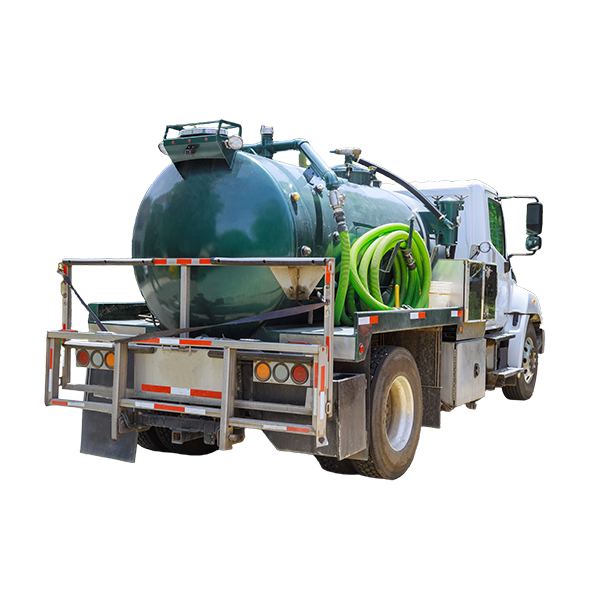
How an interceptor differs from a trap
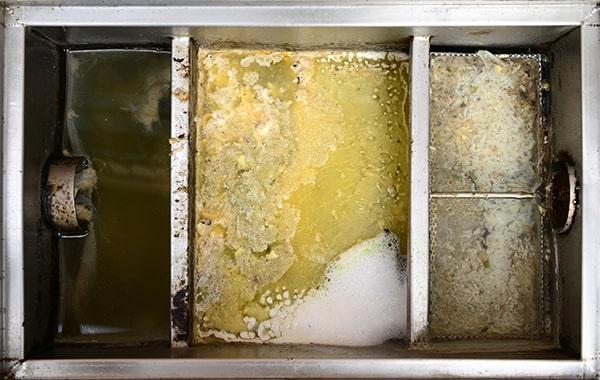
A trap sits indoors and holds a few dozen gallons. An interceptor sits under a parking lot or sidewalk, is accessed through manhole covers and holds hundreds or thousands of gallons. Most are concrete or fiberglass tanks divided by baffle walls into two or three compartments, with an inlet tee, an outlet tee and often a separate sample box on the outlet side where an inspector can draw a sample.
Because wastewater spends far longer in an interceptor, it separates grease more thoroughly than a trap. That is why sewer agencies require interceptors for larger kitchens and new construction.
Why interceptors need cleaning
An interceptor accumulates grease on top and solids on the bottom, just like a trap, and stops working properly once the two together reach 25 percent of its depth. Grease then carries over the baffle into the outlet compartment and out to the sewer. In a large interceptor that can mean hundreds of gallons of grease reaching the main before anyone notices.
Interceptors also suffer structural problems that only show up when they are opened: cracked or collapsed baffles, corroded outlet tees, damaged inlet fittings and root intrusion. A cleaning is the only time those are seen and noted.
- Every compartment opened and emptied
- Baffle walls and outlet tee scraped and checked
- Sample box cleaned and inspected
- Structural condition recorded
What a proper interceptor cleaning includes
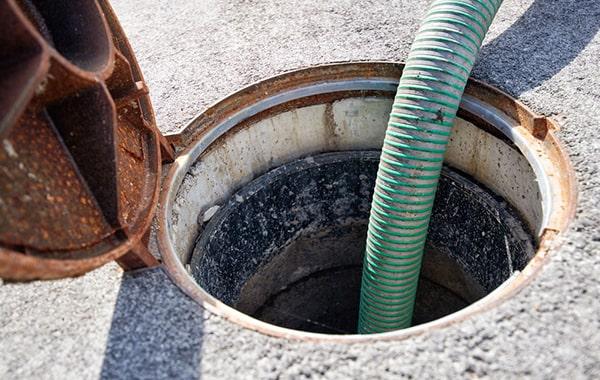
All compartments are pumped down, the baffles and walls are scraped, the outlet tee and sample box are cleared, the fittings are inspected and the tank is refilled with clean water. The crew records the grease depth measured before pumping, the volume removed and the condition of the structure, and provides the manifest number for disposal. An interceptor that is only pumped from one manhole is not cleaned; grease in the other compartments stays behind.
Where we provide this service
Pick your city for local pricing notes, sewer district requirements and neighborhood details.
- San Francisco, CA
- Daly City, CA
- Oakland, CA
- Berkeley, CA
- Richmond, CA
- San Mateo, CA
- South San Francisco, CA
- San Leandro, CA
- Alameda, CA
- Hayward, CA
- San Rafael, CA
- Millbrae, CA
- San Bruno, CA
- Redwood City, CA
- Castro Valley, CA
- Concord, CA
- Vallejo, CA
- Union City, CA
- San Carlos, CA
- Fremont, CA
- Walnut Creek, CA
- San Ramon, CA
- Pleasanton, CA
- Novato, CA
- Mountain View, CA
- Sunnyvale, CA
- Santa Clara, CA
- Santa Rosa, CA
- San Jose, CA
- Antioch, CA
- Fairfield, CA